SHG Product Survey Underway in Karbook Cluster to Strengthen Rural Livelihoods
The Self Help Group (SHG) Product Survey is presently being conducted in the Karbook Cluster, with the objective of systematically mapping, documenting, and assessing the diverse products being produced by SHGs in the region. This is a significant step towards improving SHG enterprises and rural livelihoods.
Objective of the SHG Product Survey
The survey has been designed to generate reliable data that will support informed planning and targeted interventions. Specifically, the initiative seeks to:
✅ Identify existing SHG products, production volume, and capacity
✅ Assess product quality, packaging standards, and market readiness
✅ Explore opportunities for branding, value addition, and market linkages
✅ Enable data-driven livelihood planning for sustainable income generation
Boosting SHG Market Access and Enterprise Development
Moreover, the findings of the survey will help stakeholders design customized support mechanisms for SHGs. As a result, SHG members will be better positioned to access local markets, district-level platforms, and wider commercial opportunities. The initiative also supports long-term goals of women empowerment, entrepreneurship development, and rural economic growth.
Towards Sustainable SHG Livelihoods in Karbook
On the whole, the SHG Product Survey will be an important tool in increasing the visibility and competitiveness of SHG products. As a result, it will help in the development of stronger SHG enterprises in the Karbook Cluster.
✅ Empowering SHGs through data, market readiness, and growth.
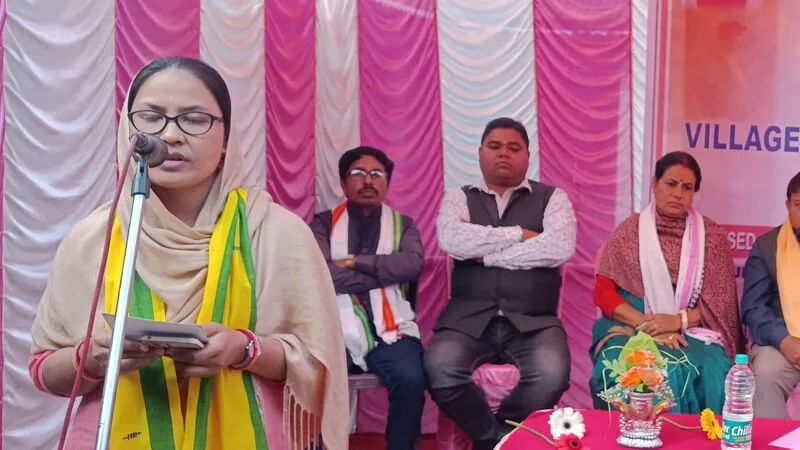
The administration observed Jal Arpan Diwas at Halam Para under the West Damcherra Village Council. As a result, the programme marked a key milestone under the Jal Jeevan Mission. Moreover, it highlighted community ownership and sustainable water management at the grassroots level.
Handover of Jal Jeevan Mission Assets
During the programme, officials formally handed over water supply assets to the Village Water Sanitation Committee. Specifically, these assets included the local water treatment plant. Through this step, the administration promoted community-led operation and maintenance. Therefore, the handover strengthened local responsibility for safe drinking water.
Presence of Public Representatives and Officials
The event was graced by Binoy Bhushan Das, Hon’ble MLA. In addition, Y K Singh, Director, National Jal Jeevan Mission, Government of India, attended the programme. Likewise, Chandni Chandran, District Magistrate and Collector, North Tripura, remained present. Furthermore, the Block Advisory Council Chairman, SDM Panisagar, BDO Damcherra, and other officials joined the event. Together, their presence reflected strong institutional support.
Community Interaction and Cultural Activities
Officials interacted directly with community members during the programme. Meanwhile, villagers shared feedback and raised local concerns. Consequently, the interaction strengthened trust and cooperation. At the same time, local cultural performances added vibrancy to the event. Additionally, these performances showcased the cultural identity of the area.
Commitment to Sustainable Water Security | Jal Arpan Diwas Damcherra
Overall, the programme reaffirmed the commitment of the Ministry of Jal Shakti and the Department of Water Resources, RD & GR. Going forward, the Damcherra Aspirational Block will continue efforts towards sustainable and community-managed water security. Ultimately, the observance reinforced the shared goal of providing safe drinking water to every household through people’s participation.
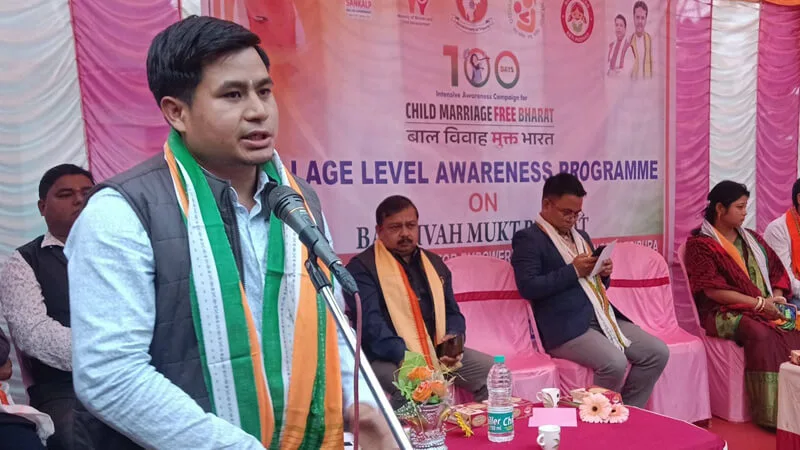
The District Hub for Empowerment of Women (DHEW), North Tripura District organised a Gram Panchayat-level awareness programme under the 100-day intensive campaign of Bal Vivah Mukt Bharat at Baruakandi, Dharmanagar. The programme aimed to create awareness about the harmful effects of child marriage and to strengthen community-level vigilance.
Community Awareness and Collaboration
The awareness session was organized in partnership with the Arghadeep NGO. During the event, the speakers emphasized the legal aspects, social implications, and future effects of child marriage. In addition, they urged the people to collectively work towards the identification of such practices.
Participation of Officials and Stakeholders
The event was attended by important district and block-level officials. These included the Sohokari Sabhadhipoti, District Welfare Officer, Additional SDM Dharmanagar, CMO North, DISE, and other government officials. Their presence at the event reiterated the government’s commitment to child protection and women empowerment. Moreover, officials emphasized the need for interdepartmental and local institution coordination.
Oath Against Child Marriage | Bal Vivah Mukt Bharat
The programme ended with a pledge-taking ceremony. The participants took an oath to prevent child marriage in their respective areas. This way, the programme increased the community’s determination to work together towards the goal of a Bal Vivah Mukt Bharat. In conclusion, the programme is a significant move towards the goal.
Launch of Sampoornata Abhiyan 2.0 in North Tripura
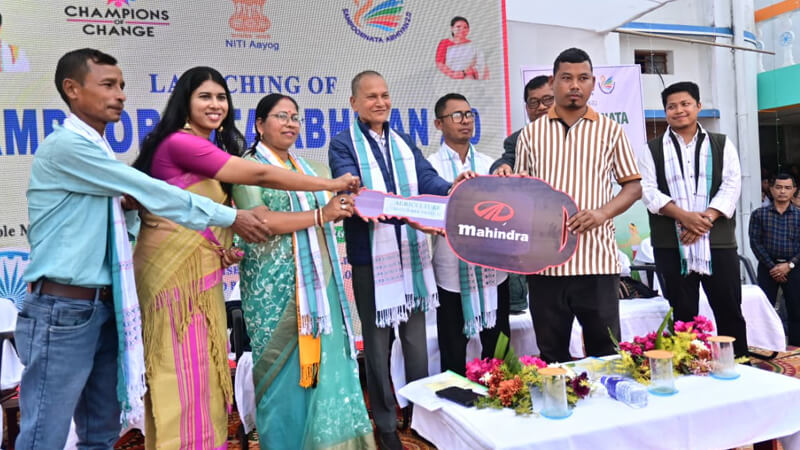
The District Administration of North Tripura District launched Sampoornata Abhiyan 2.0 for Dasda RD Block and Damcherra RD Block at Damcherra RD Block. This launch marked a major step towards holistic and inclusive development. Moreover, the initiative aims to achieve complete saturation of key development indicators within a fixed timeline. At the same time, it strengthens grassroots governance and community ownership.
Administrative Leadership and Public Participation | Sampoornata Abhiyan North Tripura
The District Collector, North Tripura, inaugurated the programme in the presence of public representatives of the district. Their participation highlighted strong administrative leadership and political support. During the programme, officials clearly outlined the vision and objectives of Sampoornata Abhiyan 2.0. Furthermore, they emphasised coordinated action among departments. They also encouraged people to actively participate in development efforts.
Student-Led Rallies and Awareness Building
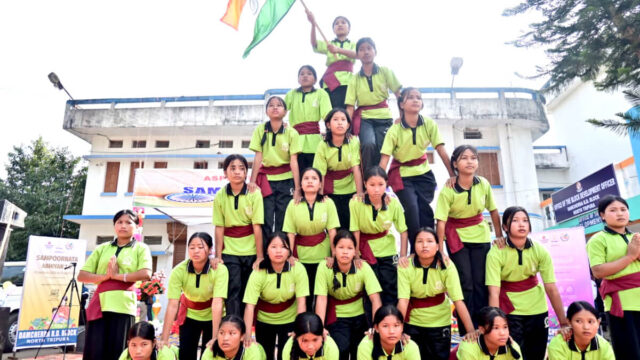
One of the major highlights of the event was the colorful Sampoornata Rally organized by school-going children. The children marched with fervor and carried placards with messages of awareness and development. Consequently, the rally attracted a lot of public attention. Moreover, it encouraged the public to take part in government initiatives. The participation of the children was a clear indication that the youth are change-makers.
Departmental Stalls and Service Outreach
Line departments erected information stalls at the venue. These stalls displayed different schemes and services offered by the government. In addition, the government officials directly interacted with the citizens at the information stalls. Citizens inquired and got immediate answers. Therefore, the project increased awareness and access to services. It also enhanced the relationship of trust between the government and the citizens.
Cultural Programmes and Collective Pledges
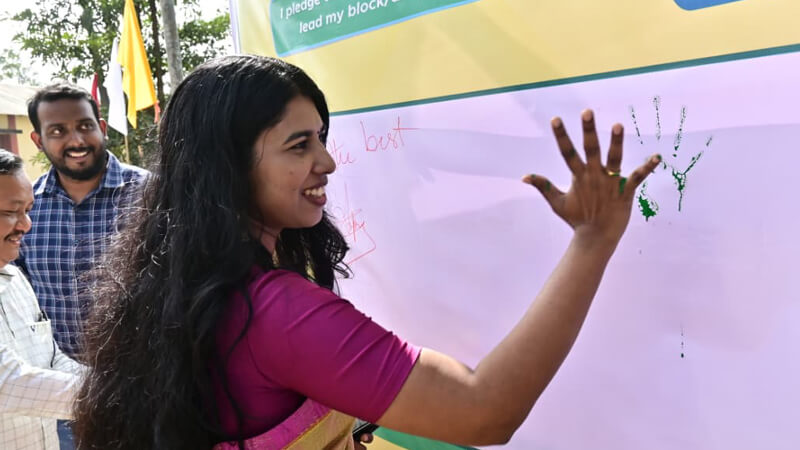
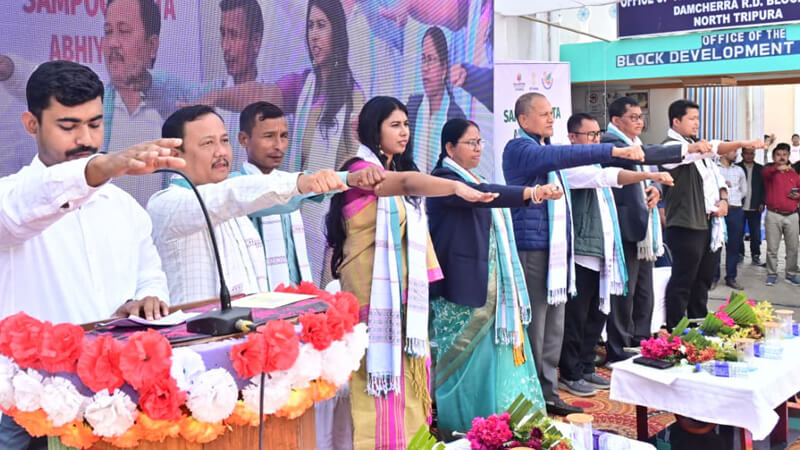
Cultural performances added vibrancy to the programme. Local artists presented traditional dances and songs that reflected the region’s rich cultural heritage. At the same time, these performances conveyed messages of unity and social responsibility. Following this, organisers conducted a pledge-taking ceremony. Participants pledged their support for the goals of Sampoornata Abhiyan 2.0. Additionally, a signature campaign encouraged citizens to show visible commitment.
Jan Bhagidari and Interactive Discussions
The programme also featured meaningful discussions with community members and stakeholders. Officials listened to local concerns and suggestions. Therefore, these interactions strengthened the spirit of Jan Bhagidari. People shared ideas on priority areas and local challenges. As a result, the administration gained valuable grassroots feedback. This dialogue will help improve planning and implementation.
Vision for Inspirational Blocks | Sampoornata Abhiyan North Tripura
In conclusion, the launch of Sampoornata Abhiyan 2.0 has once again reiterated the collective commitment of all stakeholders. The government is working towards achieving time-bound saturation of Key Performance Indicators. By convergence, coordination, and people’s participation, Dasda and Damcherra are working towards becoming truly Inspirational Blocks. At the end of the day, the whole effort is a manifestation of the collective determination to ensure inclusive, sustainable, and people-centric development in North Tripura.
World Cancer Day 2026: Theme, Significance, and the Global Fight Against Cancer
World Cancer Day 2026 will be celebrated on 4 February 2026. Every year, this significant day draws attention to the increasing burden of cancer and, at the same time, calls for joint efforts for prevention, early detection, and improved treatment. As cancer remains a reality for millions of people, World Cancer Day is a reminder that awareness and timely action can make a difference in saving lives.
The theme for World Cancer Day 2026 is officially “United by Unique,” which is a campaign that will run from 2025 to 2027. This theme provides a clear and concise message that cancer is a common problem worldwide, but each person’s experience with cancer is unique.
Thus, the theme of “United by Unique” focuses on people-centered care and not a one-size-fits-all approach. Furthermore, it emphasizes the need to understand the emotional, social, and cultural context of each patient. Consequently, the theme of “United by Unique” promotes empathy, inclusivity, and personalized care in the fight against cancer.
Understanding Cancer and Its Impact
Cancer refers to a variety of diseases that involve the uncontrolled growth of abnormal cells, which may invade other parts of the body. In case the cells are not identified and treated early, they may cause harm to the vital organs of the body and become life-threatening.
Among the most prevalent forms of cancer include breast cancer, lung cancer, cervical cancer, oral cancer, colorectal cancer, and blood cancers like leukemia. However, it is essential to note that most cancers are preventable and can be treated if identified and staged early.
Why World Cancer Day Matters
World Cancer Day is more than just a day for awareness; it is a day for action. First and foremost, it raises awareness about the risks and symptoms of cancer. Secondly, it advocates for early screening and health checks. Moreover, it also works towards decreasing the myths and stigma related to cancer.
Additionally, World Cancer Day also supports cancer survivors and caregivers by providing them with a platform to express their experiences. Most importantly, World Cancer Day has the ability to affect policymakers to make investments in better healthcare infrastructure and accessible cancer treatment.
Cancer Prevention: Taking Action Early
Notably, a large number of cancer instances can be prevented by making healthy lifestyle choices. For instance, not smoking, drinking in moderation, eating a healthy diet, and staying physically fit can significantly lower the risk of developing cancer. In addition, exercising regularly and protecting oneself from too much sun exposure are also crucial.
Furthermore, vaccines such as the HPV vaccine and the Hepatitis B vaccine can prevent certain cancers. Therefore, cancer prevention becomes one of the most effective and cheapest ways to combat cancer. World Cancer Day 2026 strongly emphasizes that making a few changes in life can result in a healthy future.
Early Detection and Screening Save Lives
Moreover, early diagnosis leads to a substantial increase in survival rates for various cancers. Screening projects for breast, cervical, oral, and colorectal cancers have been highly successful when conducted on a large scale.
Thus, World Cancer Day urges people to be aware of the early signs of cancer and consult a doctor without any delay. It also urges governments to increase the number of screening facilities, particularly in rural areas. As a result, early diagnosis not only leads to the survival of people but also results in reduced treatment costs.
A Strong Global Call to Action
The central message of World Cancer Day 2026 is clear: Behind every cancer diagnosis is a unique human story.
Thus, fighting cancer requires unity, compassion, and sustained commitment. While governments must strengthen healthcare infrastructure, organizations must continue awareness efforts. Meanwhile, individuals must take responsibility for their own health through informed choices and regular check-ups.
Conclusion | World Cancer Day 2026
Conclusion: World Cancer Day 2026: Cancer is not only a disease; it is a human experience. The theme “United by Unique” calls for the world to unite while being unique. In the end, it is possible to lower the burden of cancer in the world through awareness, prevention, early detection, and people-centered care.
Step by step, the world can come closer to a future with fewer deaths from cancer and a healthier world for everyone.
OpenAI Launches Codex Desktop App, Intensifying Competition in AI Coding Tools
San Francisco: OpenAI has rolled out Codex Desktop, a new native macOS app that allows AI coding assistants to work together as teammates. This is a significant step for OpenAI as the competition is heating up in the rapidly changing AI developer tools space.
The launch of the new app is also important as it comes at a time when other platforms like Claude Code and Claude Cowork from Anthropic are gaining popularity among developers. As AI assistants become a part of the daily working routine, the desktop is the next level of competition.
What Codex Desktop Brings to Developers
Codex Desktop serves as a command center for AI models. With the macOS app, users can set up projects, run parallel tasks, handle multiple threads, and track progress in real-time.
Furthermore, the app seamlessly integrates with Git and supports worktrees. Developers can examine diffs, comments, and changes before committing code. Consequently, Codex Desktop eliminates the gap between planning, execution, and review.
OpenAI has integrated Codex Desktop into the ChatGPT Plus, Pro, Business, Edu, and Enterprise plans. In addition, the company is providing limited access to free-tier users. This strategy enables teams to use the app without procurement hurdles. OpenAI has also announced increased token limits for plans.
From Coding Assistant to Agentic System
While OpenAI promotes Codex as a coding assistant, the use of agent-based systems has expanded. Codex is now used for feature writing, document review, and suggested actions in workflows.
Before the desktop application, Codex was used through web interfaces, command-line interfaces, and IDE integrations. The desktop app combines all these workflows. As such, users can now control long-running tasks without constantly switching between contexts.
The process is less like having a conversation with an AI and more like supervising a team. Users assign tasks, monitor progress, and approve changes before deployment. Using parallel execution, teams can execute multiple tasks concurrently and pause agents to analyze decisions.
Competitive Pressure from Claude and Copilot
The competitive landscape is getting increasingly crowded. Over the last year, Anthropic’s Claude Code started gaining traction because of its speed and accuracy. But the recent service disruptions have shown the danger of cloud-based endpoints.
Microsoft Copilot is still very much integrated into the enterprise IDEs. With the additional agent modes and workspace capabilities, Copilot keeps Microsoft in the conversation.
In this context, Codex Desktop further solidifies OpenAI’s position with its resilience, orchestration, and long-task management capabilities in a native environment.
Business Impact and Risk Considerations
Coding assistants using AI have evolved from being a gimmick. They currently cut development times, increase team capacity, and allow smaller teams to deliver complex systems.
Desktop deployment of AI changes the technology from being an “optional add-on” to a “productivity seat.” However, more autonomy of the agents poses potential risks. Too much freedom can lead to security, compliance, and privacy issues. Conversely, too many restrictions can limit the competitive edge.
A Shift Toward Task-Based AI Work
With Codex Desktop, OpenAI nudges developers toward task-based orchestration rather than prompt-based interaction. Teams define objectives, set acceptance criteria, and let agents work in the background.
If OpenAI maintains ease of review and reliability, overnight agent execution could soon become standard practice. In that scenario, the real winners will be platforms that make AI collaboration feel routine.
NASA Artemis Rocket Launch Target Moves to March After Successful Wet Dress Rehearsal
Florida: NASA has completed a critical wet dress rehearsal for the Artemis II mission, marking a major milestone toward the next NASA Artemis rocket launch. The space agency successfully fueled the Space Launch System (SLS) rocket, completed Orion spacecraft closeout operations, and safely drained the vehicle after the test.
The wet dress rehearsal simulated launch-day procedures and allowed engineers to identify technical issues ahead of flight. As a result, NASA will now target March as the earliest possible launch window for Artemis II.
Key Objectives Met Despite Technical Challenges
During the two-day test, engineers worked through several challenges while meeting many planned objectives. Importantly, teams fully loaded cryogenic propellant into the rocket’s core stage and interim cryogenic propulsion stage.
However, cold weather at Kennedy Space Center delayed tanking operations. Engineers needed additional time to bring several interfaces to acceptable temperatures before fueling could begin.
Liquid Hydrogen Leak Delays Countdown | NASA Artemis rocket launch
During propellant loading, teams detected a liquid hydrogen leak in an interface that routes fuel into the core stage. Consequently, engineers paused the countdown to troubleshoot the issue.
They stopped the propellant flow, warmed the interface to reseat seals, and adjusted fuel flow rates. Although teams resolved the issue enough to proceed, the leak rate later spiked during terminal countdown operations. Therefore, the ground launch sequencer automatically halted the countdown at about five minutes remaining.
Orion Closeout and Additional Technical Issues
After the tanking, a team of five members went to the launch pad to finish the closeout of the Orion spacecraft. However, a valve associated with the pressurization of the crew hatch needed retorquing, thus adding to the timeline.
Additionally, cold weather impacted some cameras and ground equipment. Although these problems did not cause a halt in the test, the team realized that they would need to be addressed on the day of the launch. Furthermore, audio communication dropouts recurred.
Because NASA moved off a February launch window, the Artemis II astronauts will exit quarantine. They entered quarantine in Houston on January 21 and will reenter it about two weeks before the next targeted launch date.
The Artemis II crew includes Reid Wiseman, Victor Glover, Christina Koch, and Jeremy Hansen of the Canadian Space Agency.
Safety Remains Top Priority | NASA Artemis rocket launch
With March now under consideration, NASA teams will review test data in detail. They will mitigate all identified issues before announcing an official launch date.
Ultimately, NASA stressed that crew safety remains the highest priority. The Artemis II mission will mark the first crewed flight of the Artemis program around the Moon and a key step toward future lunar landings.
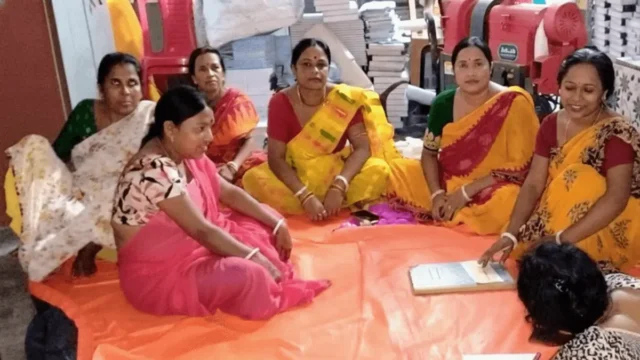
TRLM Micro Credit Plans, Field-level teams are actively preparing Micro Credit Plans (MCPs) to support Self-Help Groups (SHGs) in accessing loans from financial institutions. Through this process, the administration aims to ensure timely and structured credit linkage.
At present, these activities are underway across multiple locations under the Samriddhi Campaign of the Tripura Rural Livelihood Mission (TRLM). Importantly, teams are working in campaign mode to achieve faster outreach.
Campaign Approach for Faster Credit Linkage
Under this approach, officials coordinate closely with SHGs and banking partners. As a result, they can identify credit needs more efficiently.
Moreover, campaign-mode implementation helps cover a larger number of SHGs within a shorter timeframe. Therefore, eligible groups face fewer delays in accessing institutional finance.
Strengthening Financial Inclusion of SHGs | TRLM Micro Credit Plans
At the core, the MCP initiative focuses on strengthening financial inclusion. By preparing detailed credit plans, SHGs can approach financial institutions with greater confidence.
In addition, structured planning improves transparency and accountability. Consequently, banks can process loan applications more smoothly.
Encouraging Livelihood Diversification
Alongside credit access, the initiative promotes livelihood diversification among SHG members. For this purpose, field teams assess local resources and income opportunities.
Furthermore, diversified livelihoods reduce dependency on a single income source. As a result, SHGs gain better financial stability and resilience.
Capacity Building for Sustainable Income
Equally important, the MCP process builds the capacity of SHGs. During field interactions, teams guide members on loan utilisation and repayment planning.
Additionally, SHGs receive support on enterprise management and financial discipline. Therefore, they can manage credit responsibly and sustain income over time.
Overall, the ongoing MCP preparation reflects TRLM’s commitment to inclusive rural development. By combining credit linkage, capacity building, and campaign-driven execution, the mission strengthens SHG-led livelihoods.
Going forward, officials expect improved credit flow to enhance income security. Ultimately, the initiative aims to empower SHGs and strengthen the rural economy of Tripura.
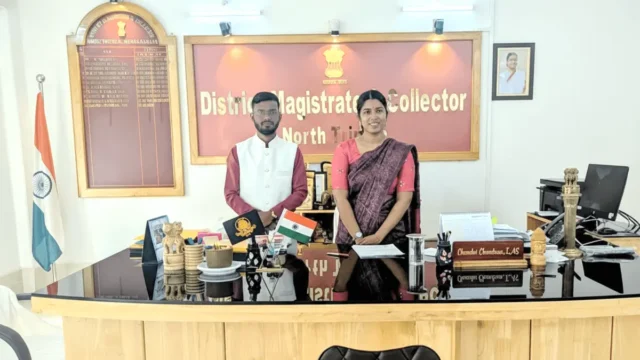
North Tripura: Diya Art School initiative The District Magistrate and Collector of North Tripura met the founder of Diya Art School and appreciated the institution’s contribution to inclusive art education. The meeting highlighted the role of community initiatives in supporting children from weaker sections.
Fees Waived for 500 Students | Diya Art School initiative
In the course of the interaction, the District Magistrate came to know that Diya Art School has waived the monthly fee for 500 students. Consequently, children from economically weaker sections of society can now learn art without worrying about money.
Furthermore, this initiative will make sure that talent does not get restricted by financial boundaries. Therefore, children can express their creativity freely.
Focus on Inclusive Art Education
The reason for this decision was explained by the founder of Diya Art School. As the founder stated, the goal of the school is to provide art education for every child.
Moreover, the school is convinced that art education helps children become confident, imaginative, and emotionally strong people. Therefore, by eliminating the cost factor, children can fully concentrate on studying.
Administration Appreciates the Initiative
On the other hand, the District Magistrate appreciated the effort and called it inspiring. He said that art is an important part of the overall development of children.
In addition, he said that such activities help the administration in achieving the aim of inclusive education. Thus, it is important to appreciate the efforts of community-based institutions.
Positive Response from Parents and Students
Parents and students welcomed the decision with gratitude. As a result, many children now have access to structured art learning for the first time.
Additionally, the initiative has encouraged hidden talent among students who previously lacked opportunities.
A Model for Community Support | Diya Art School initiative
On the whole, the initiative taken by Diya Art School is a very heartwarming example of social responsibility. In this manner, the school has been able to demonstrate that art education can bring about positive change.
Looking ahead, the authorities are hopeful that more institutions will follow suit. In this manner, such initiatives will bring about social harmony and inclusive growth.
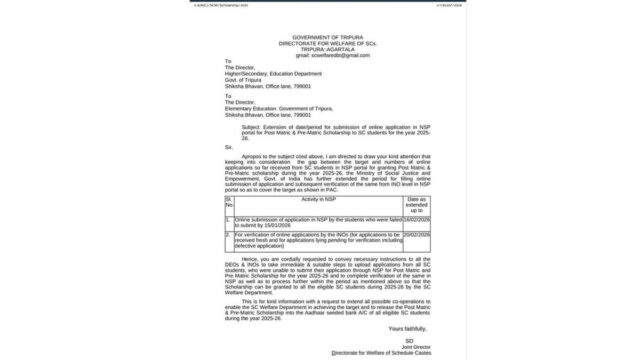
Agartala: Tripura SC scholarship deadline The Tripura Government has extended the deadlines for online applications and verification under the Post-Matric and Pre-Matric Scholarship schemes for Scheduled Caste (SC) students for the academic year 2025–26.
The Directorate for Welfare of Scheduled Castes, Tripura, issued the extension following directions from the Ministry of Social Justice and Empowerment, Government of India. The decision aims to cover more eligible students on the National Scholarship Portal (NSP).
Extended Dates for Application and Verification
Under the revised schedule, SC students who missed the earlier deadline can now submit online applications on the NSP portal until 16 February 2026.
After submission, Institution Nodal Officers (INOs) will verify applications. They must complete this process by 20 February 2026. The verification will include pending and defective applications from earlier rounds.
Directions to Education Departments |Tripura SC scholarship deadline
The Directorate has instructed the Higher/Secondary Education Department and the Elementary Education Department to act immediately. Both departments must guide District Education Officers (DEOs) and INOs to assist students.
Officials asked institutions to help students complete submissions and verification without delay. Timely action will ensure smooth processing of scholarships.
Focus on Full Coverage of Eligible Students
The extension seeks to bridge the gap between targets and applications received so far. The SC Welfare Department aims to ensure that every eligible SC student receives scholarship support during 2025–26.
The department will credit scholarships directly to the Aadhaar-seeded bank accounts of eligible students. Authorities stressed that proper verification remains essential for timely payment.
Advisory for Students and Institutions | Tripura SC scholarship deadline
The government advised students to submit applications immediately and contact their institutions for support. Institutions must cooperate fully to complete verification within the extended timeline.
The Tripura Government reaffirmed its commitment to supporting SC students’ education. It urged all stakeholders to act promptly so that benefits reach students on time.